Cultural Evening
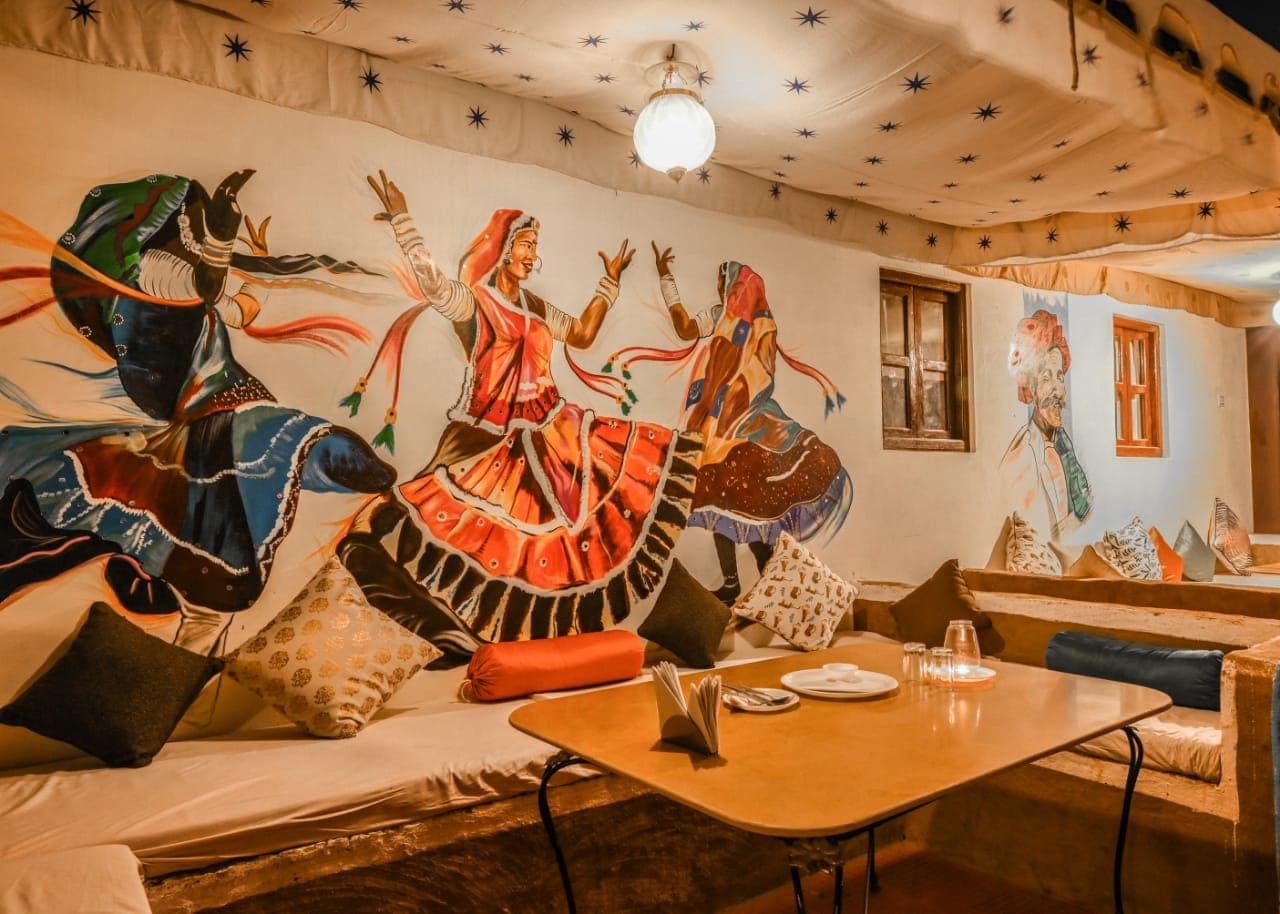
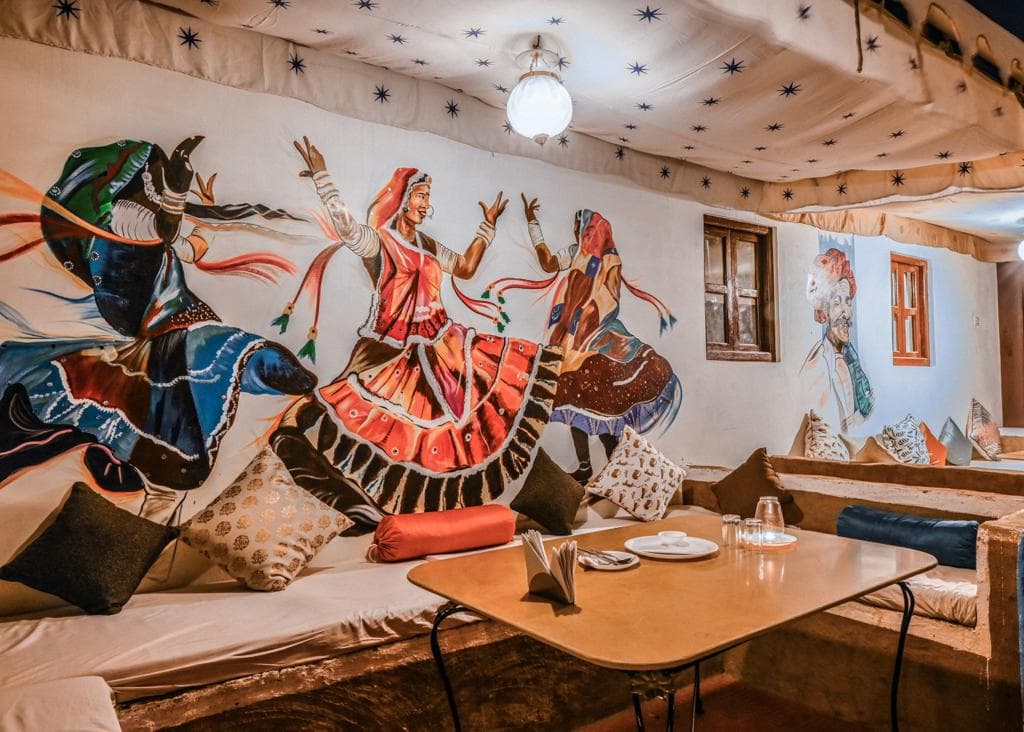
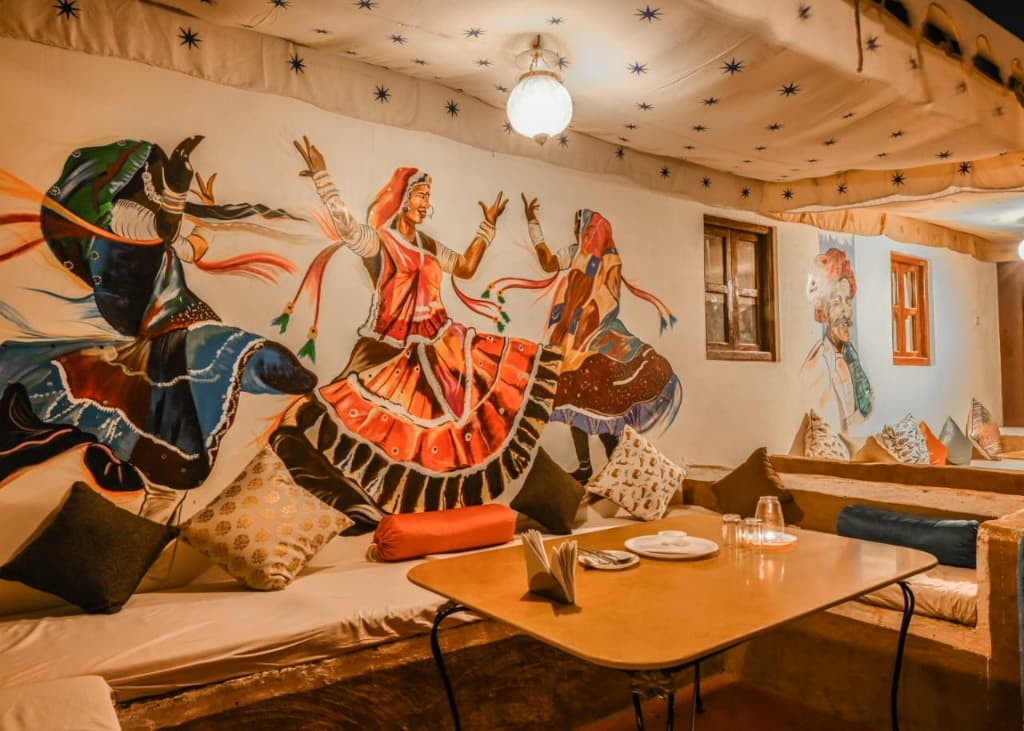
Live folk music and five distinct dance traditions, performed by musicians and dancers from villages nearby.
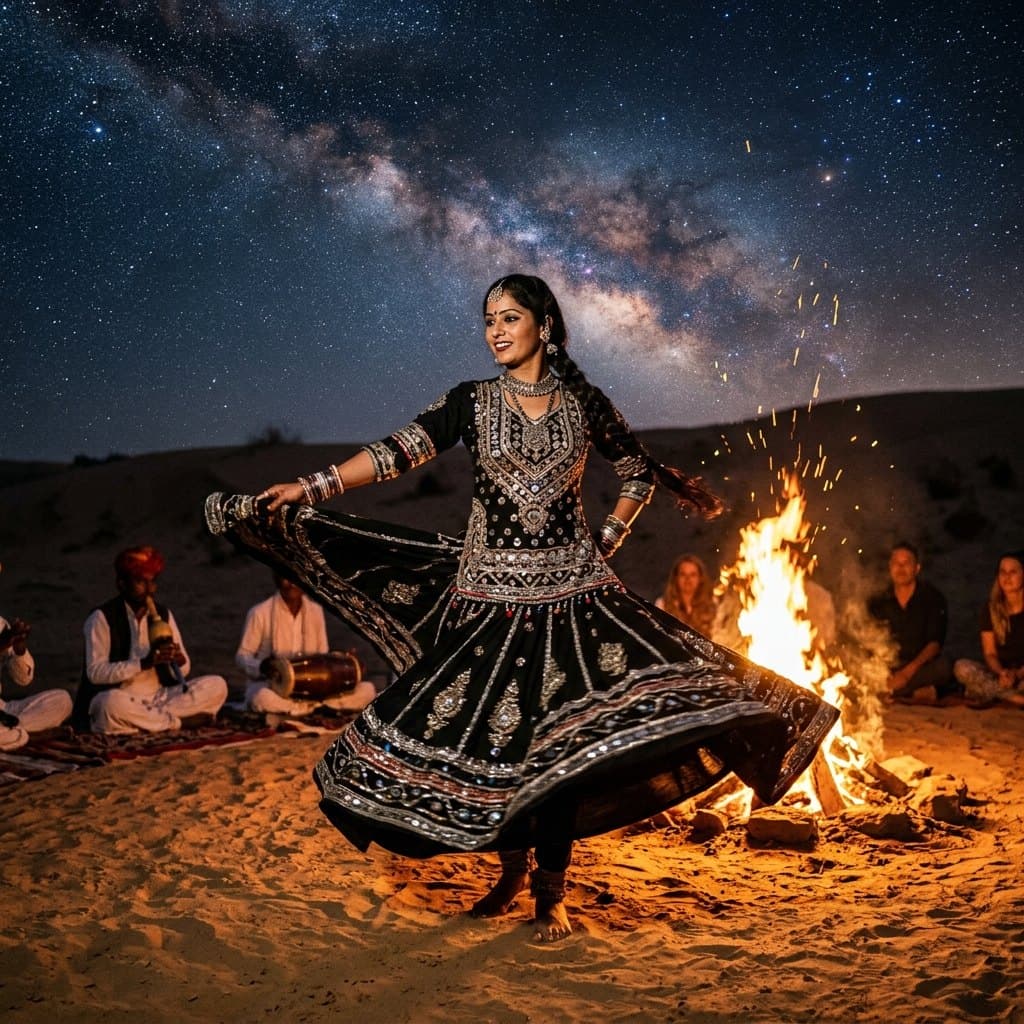
Cultural Evening — Explore Overnight Desert Camp Jaisalmer, Khuri
What it is
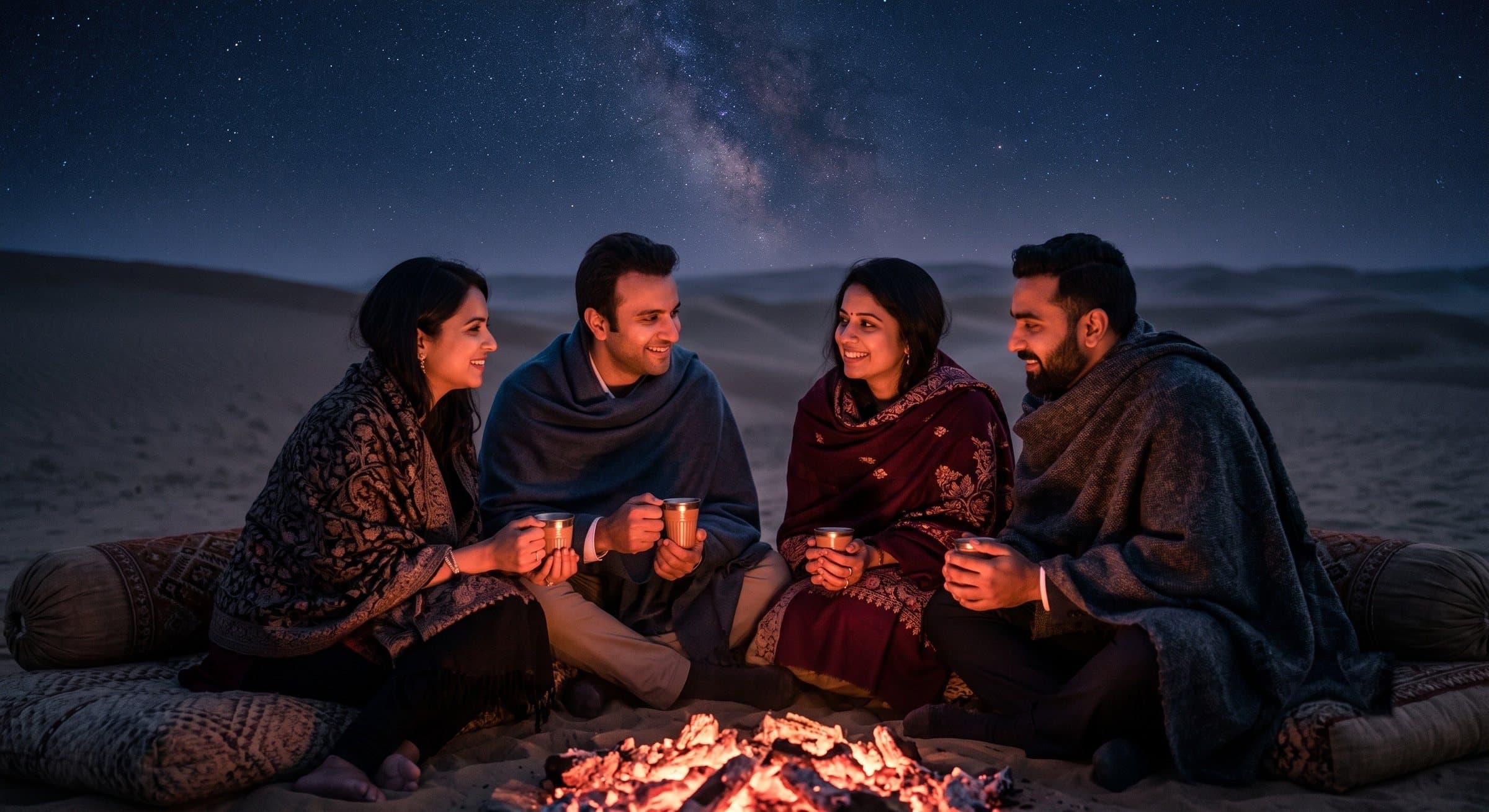
An evening of live Rajasthani folk music and dance around the fire, built from five separate traditions rather than one generic performance.
Why it matters
Most desert camps bundle every performer into a single "cultural evening" line item. Each of these five forms has its own history, instrumentation, and technique — treating them as interchangeable erases exactly what makes them worth watching.
What to expect
Performances run for roughly ninety minutes after dinner, seated around the fire pit.
Musicians and dancers travel from villages within a few hours of camp; the lineup can shift night to night depending on who's performing.
Each dance, on its own terms
KalbeliyaKalbeliya community, traditionally snake charmers
Kalbeliya dancers trace their lineage to a nomadic snake-charming community of Rajasthan, and the choreography still echoes it — the spine curls, the black skirt spins, the movement never quite stops.
In 2010, UNESCO listed Kalbeliya song and dance as part of humanity's Intangible Cultural Heritage.
GhoomarBhil community, later adopted across Rajput households
Ghoomar began with the Bhil community and was later taken up by Rajput women as a celebratory dance for festivals and weddings.
Dancers move in a circle in flowing, wide-hemmed skirts, the fabric lifting outward as they turn — the name comes from ghoomna, to turn.
BhawaiTraditionally performed by women of desert communities
Bhawai is built around balance rather than footwork alone — dancers carry several brass pots stacked on the head while dancing on a small surface, sometimes the rim of a plate or the edge of a sword.
The pots stay stacked and lit through the full performance; the dance is judged as much on control as on movement.
ChariSaini community of the Kishangarh region, Ajmer
Chari — meaning pot — takes its name from the brass vessels dancers balance on their heads, traditionally carried while collecting water in a desert with few sources of it.
A cotton wick is lit inside the pot for evening performances, so the dance is done by its own small flame.
GypsyRajasthan's traveling desert communities
Performed by dancers from the region's traveling communities, this is the fastest and most group-driven of the five — less about a single dancer's technique, more about the whole troupe moving in formation.
It's usually the form that closes the evening, handing off directly into the fire show.
More from this experience